AI vs Human Marketers: The Bots Are Faster. Here’s How You Still Win
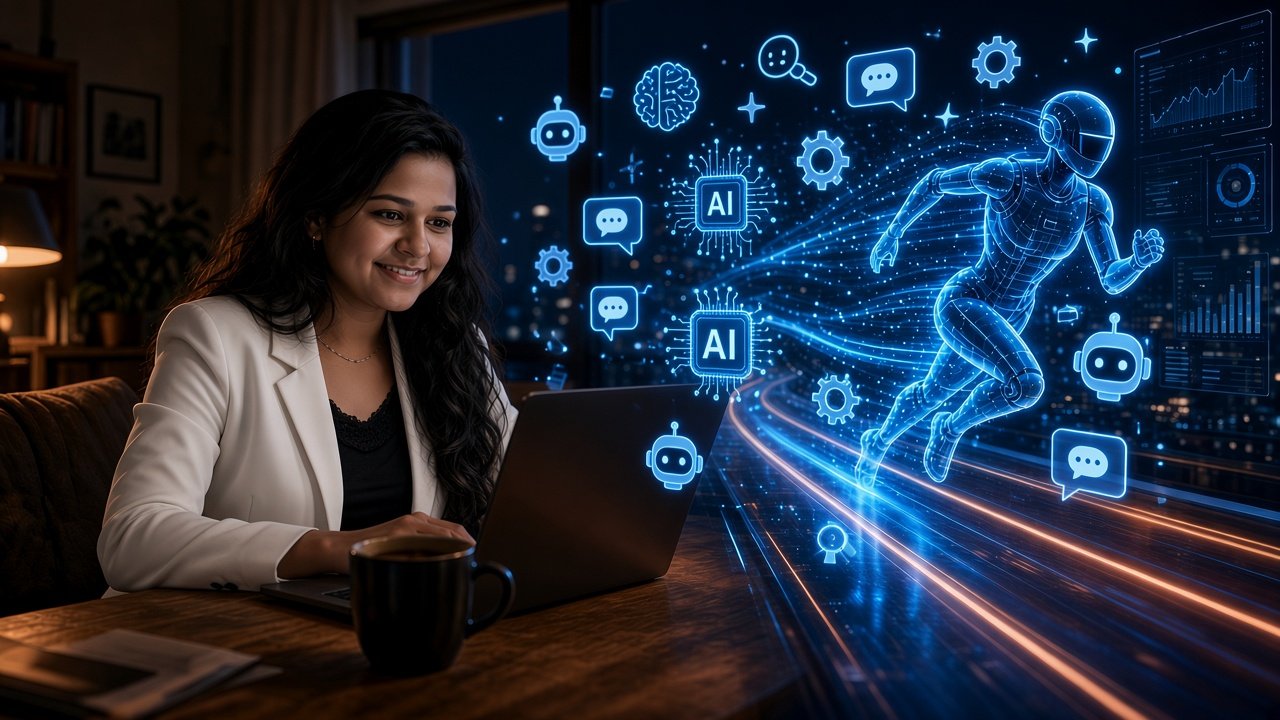
Picture this.
It’s 11:40 pm. Priya, a PPC manager in Pune, is still awake because a client’s Google Ads account is bleeding money. She opens the search terms report, coffee gone cold, and starts hunting for the junk queries one by one.
At the same moment, in a data centre somewhere, a bot is doing the same job for another advertiser. It doesn’t need coffee. It checked ten thousand queries while Priya was still scrolling her first page. It also wrote six new headlines, moved budget to the best ad group and went quiet.
Priya is a made-up person. The bot is not.
So who wins that night? Honestly, the bot. Faster, cheaper, never sleepy.
But stay with me, because that is not the end of the story. Priya still has one move the bot can’t make. By the end of this post you’ll know what it is.
Half the internet is not human anymore
Here’s the first shock. As per Imperva’s 2025 Bad Bot Report, bots made 51% of all web traffic in 2024. First time in ten years they beat humans.
Read that again. Half the “visitors” on the web are machines.
Now think about your monthly report. That proud line going up and up? A good piece of it may be scripts visiting your site, not people.
We saw a small version of this on our own analytics. One day, a sudden jump in visits from one country. Conversions? Zero. Nobody on that spike was buying anything.
A bot can make traffic. It can’t tell your client what the traffic means. That’s job one for you.
And this is the gentle part. The next one hurts more.
Google is answering for you and keeping the click
Google’s AI Overviews now reach more than 2.5 billion people a month, as Sundar Pichai said at Google I/O in May 2026. Your customer types a question, and Google answers it right there on top.
So does anyone still click?
Pew Research Center tracked the real browsing of 900 American adults. When an AI summary showed up, people clicked a normal result in only 8% of visits, against 15% without one.
Almost half the clicks, gone.
My bold opinion? The basic “What is SEO” article is dead. AI already wrote it, Google already shows it, and nobody needs yours.
What survives is the stuff AI can’t copy. Your tests. Your numbers. Your mistakes. Keep that thought, we’ll come back to it.
Because the ad platforms are coming for the other half of your job.
The ad platforms want your steering wheel
Google’s AI Max can now take your keywords, stretch them, write headlines and pick landing pages with one click. Meta wants to go further. As per a Wall Street Journal report, Meta aims to let brands fully create and target ads with AI by the end of 2026. Give it a product photo and a budget. That’s it.
Think about what that really means. A shoe brand uploads one picture. The AI makes the video, writes the caption, picks who sees it in Mumbai and who sees it in Melbourne, and decides how much to spend on each. Nobody in the brand touched a single setting.
Sounds like Priya is finished, right?
Not so fast. In April 2026, Marketing Brew talked to the people actually spending the money. One agency said the AI tools were still overspending on low quality placements, and that brands will need human help “for quite some time”.
Here’s how I see it. The algorithm is a brilliant driver who has never seen a map. It will take you exactly where you point it. Very fast. Wall included.
Somebody has to point it. Somebody has to see the wall coming before the money is gone.
Wall Street has already decided who that somebody is not.
One bad day on Wall Street
August 2025. The Trade Desk, the adtech company everybody loved, reported earnings. They beat expectations.
Normally that’s party time. Champagne, high fives, maybe a nice tweet from the CEO.
Instead the stock fell nearly 40% in a single day. The worst day in its history. Imagine refreshing your share app that morning and watching almost half your money disappear while the company had actually done well.
Why? Investors were scared of Amazon, the company sitting on everyone’s shopping data.
Six months later, WPP, the giant behind Ogilvy, told the world it wants to become “a simpler, lower-cost, AI-enabled business”. Translation: fewer people. By then its share price had already lost more than two-thirds in a year.
Good results didn’t save one. Big history didn’t save the other.
The lesson is simple and a little scary. Money is running to whoever owns the data and the AI. If your whole job is “doing the tasks”, you are standing in the middle of the road.
So how do you step out of the road?
What the human does that the bot can’t
Funny thing. Back in 2017 we wrote a post here asking whether AI was the big risk for digital marketing jobs. At that time the scary “AI” was a tool that found backlinks and scheduled Facebook posts. Cute, no?
The fear was early. The answer is still the same, though. The machine takes the tasks. The human keeps the thinking.
So here is Priya’s last move. Actually, it’s five of them.
She decides what winning means. The bot chases whatever goal you give it. Ask for form fills and it will bring you a hundred fake ones. Priya sits with the owner and asks, “Which lead actually became a customer?” Then she tracks that. One good question beats ten thousand fast clicks.
She owns a story no machine has. AI knows everything already published. It does not know what happened inside her client’s account last Diwali. When she writes from real experience, with real screenshots, she becomes the source AI has to quote.
She checks the machine. An auto-written ad can promise a discount the client never offered. A human catches that before the customer screenshots it. Boring work? Maybe. But it’s the person who catches mistakes that companies keep when they cut costs.
She uses AI like a junior. First drafts, keyword grouping, ten headline ideas at 6 pm when her brain is empty. The bot types. She thinks. She signs.
She says no. “Please don’t launch this, it won’t work.” No platform will ever tell your client that, because the platform doesn’t lose anything when your client loses money.
Now let me go one step further than most people are willing to go.
The next customer may not be a person
Google has already said it wants Search to help people book reservations, fill forms and make purchases. In plain words, AI agents are going to shop for us.
Imagine your product page being “read” by a bot that is comparing you with five competitors for someone’s mother in Indore. It doesn’t care about your pretty banner. It wants your price, your delivery time and your return policy, clear and right there.
If it can’t find them in a second, it simply moves to the next site. No bounce rate to warn you. No angry comment. You just lose, quietly, and never find out why.
So the marketer of tomorrow sells to two audiences at once. Humans who feel. Machines who read.
Most marketers are only ready for one of them.
What you do on Monday morning
Don’t just nod and close this tab. Do these five things this week.
- Open your analytics and hunt the fake traffic. Look for spikes from one place with zero conversions. Remove them from your reports before your client finds them.
- Kill one “what is” post idea. Replace it with something only you can write: a test you ran, a result you got, a mistake you made. If you need the basics first, our older guide on how AI is changing digital marketing is a good start.
- Ask one client what a good lead really is. Then fix the conversion tracking to match. This one change helps every AI tool you use.
- Give AI one boring task every day. Drafts, summaries, keyword sorting. Then edit hard and put your name on it.
- Read your product or service page like a bot. Can a machine find the price, the timeline and the policy in ten seconds? If not, fix it.
So who wins?
Let’s go back to Priya at 11:40 pm.
The bot cleaned the search terms faster. True, no argument there. But tomorrow morning, after a few hours of sleep and one strong chai, Priya is the one who calls the client and says, “We were chasing the wrong goal. Let’s change it.” The bot never makes that call. It doesn’t even know there is a call to make.
That’s the race. Not human against machine.
The bots will win every race about speed. Make sure yours is a race about judgement.
What do you think, are you racing the bots or riding them? Tell us in the comments.